We analyse texts from the fields of fiction and non-fiction and think about how high-quality eroticism can look today. We have no patent remedies, but put our thoughts and convictions on erotic literature on paper.
We regard the texts presented here as “work in progress”, which are constantly being expanded and updated as soon as we find new, exciting examples or topics. Ideally, over time this will create a pool of ideas for erotic literature for all those who write themselves.
As some of you may already know, we’ve been publishing erotic stories on Amazon Kindle for ten years—and have now been kicked out of the program without any specific reasons given. Ten years of work, countless stories, a loyal readership—gone just like that, from one day to the next. Unfortunately, we’re not alone in this. … Continue reading Creative Break for Our Erotic Project→
Dialect in erotic literature is more than just a stylistic device. It is a sensual instrument: it embodies corporeality, social origin, regional rootedness, and the deliberate break with societal norms. While standard language often feels distant, cool, or overly literary, dialect brings the unvarnished, earthy, sometimes crude voice of everyday life straight into the realm … Continue reading Dialect in Erotic Literature: Rawness, Intimacy, and the Allure of the “Other”→
Imagine: a sorority party. The lights are dimmed, the air smells of vanilla and sweat. A young woman stands in the middle of the room—completely naked. Everyone can see everything. And then she whispers. Just one word. With that tiny, breathless fluctuation in her voice, that barely audible tremor at the end of the sentence. … Continue reading Why does a certain tone of voice arouse more than naked skin?→
At 45, the body does not change “suddenly,” but gradually. And yet there are moments when you notice it in a very quiet way. Not in the mirror. But up close. In the scent of your own skin on your wrist. In the way a breast feels in your hand. In the tiny hesitation before … Continue reading Sensory perception at 45: skin scent, breast texture, touch, and desire→
Onomatopoeia, or sound symbolism, is one of literature’s most powerful stylistic devices: words whose very sound imitates the noise they describe – “plop”, “hiss”, “slap”, “moan”, “pant”. In erotic literature it plays an especially intimate role. It doesn’t just make the scene visible – it makes it audible, tangible, almost graspable. The reader becomes not … Continue reading Onomatopoeia in Erotic Literature: From Tender Sighs to Wet Slapping Sounds→
The ENF (Embarrassed Naked Female) genre focuses on scenes in which female characters find themselves in embarrassing, naked situations. Their job is to create tension and excitement through something we are all familiar with: the shame of being seen naked. Members of the LGBTQ+ community experience this shame just as much as cis women do. … Continue reading LGBTQ+ ENF scenes without reproducing the “male gaze”→
Most erotic texts don’t fail because writers lack imagination. They fail because the writing slips into autopilot too fast. Familiar images. Overused metaphors. The stuff you’ve read a hundred times. So here are ten exercises: ten very concrete, very physical writing prompts. Rules: Write at least 150–250 words per prompt. No AI, no Google, no … Continue reading 10 Sensual Writing Prompts That Get Under Your Skin→
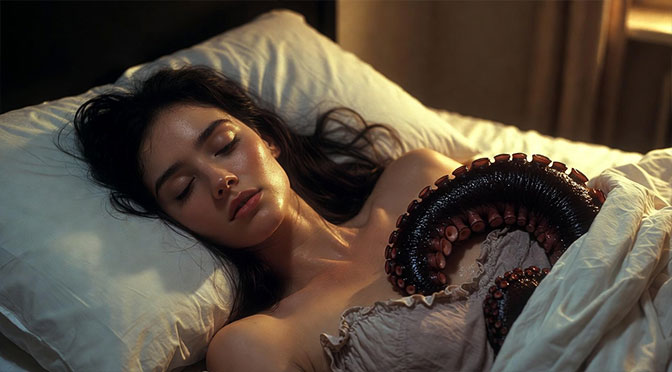
Tentacles—those serpentine, multi-armed structures from the realm of sea creatures or fantastical beings—have played a fascinating and often controversial role in literature. From a psychological perspective, they represent not only the unknown and the unfamiliar, but also deep desires for submission, multiple stimulation, and the transgression of social taboos. In this blog post, we take … Continue reading Tentacles in literature: From their origins to the modern era→
A week ago, I took you on a journey through the history of the clitoral orgasm. The clitoris, that small, sensitive pearl of nerve endings, sits enthroned at the top of the vagina, swollen and ready to ignite waves of pleasure. It is not hidden, not mysterious. It simply pulsates when touched, demanding attention. But … Continue reading The myth lurking in bed→
Tentacle erotica is something many people first encounter as a visual genre: manga, anime, games. In prose, the motif can look “illogical” at first glance, because tentacles aren’t human anatomy and because a lot of their impact is visual. That’s exactly where the opportunity sits. In text, tentacles are less decoration than a dramatic device. … Continue reading Tentacle Erotica in Prose: Why Tentacles Are More Than a Kink→
the creative writing magazine for erotic literature