
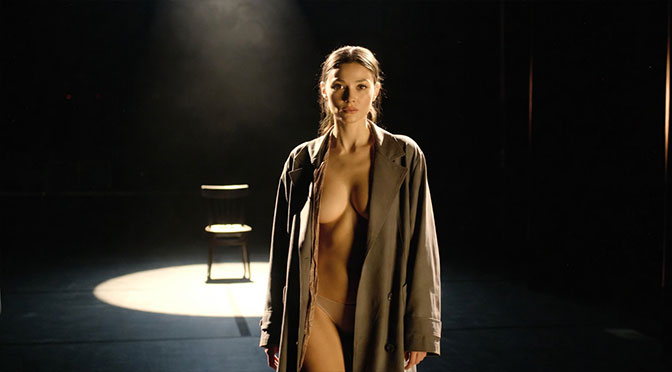
In erotic literature, a new beginning is rarely just a decision, but rather an event that takes hold of the body and carries it away. Initiations are the tool that transforms a vague “from now on” into an unambiguous “now it’s happening.” They mark the moment when intention turns into action and the body becomes a witness. Each initiation follows its own rules, shaping the transition between a clear before and an irrevocable after.
The price of such a threshold often becomes visible—and it is not uncommon for it to be paid with one’s skin. Initiations can be told on a small scale: a key that is turned, an oath that is whispered, a glance that changes everything. But they can also become grand rituals that cannot be reversed and that shape the character forever. Whether minimal or monumental, the decisive factor is that they involve the body and make it the vehicle of change.
Why initiations are erotic without being sexual
Eroticism often arises long before sex, namely at the moment when someone crosses an invisible threshold. The body often knows more than the mind and reveals what is really happening through posture, breath, or a sudden gesture. In initiation, the role of the figure changes: a guest becomes an initiate, an observer becomes a participant, and the thought “I could leave” becomes the certainty “I will stay.”
This metamorphosis is inevitably reflected in the body—in the way someone stands, breathes, or speaks, and often also in the naked skin, which becomes visible not as adornment but as a consequence. Nudity in ritual is not automatically pornographic, but can be a sign that says: there are no more masks here, only the body with everything that belongs to it. It is not a promise, but a declaration that seals the transition and transports the figure into a new state.
The grammar of a ritual: threshold, rules, witnesses
Every ritual needs a threshold moment in which something closes and something new opens at the same time – be it a door, a curtain, a circle of light, or a sentence that can no longer be taken back. Rules lend tension to the scene because they limit what is possible and force decisions that press the body into a certain form. Without them, nudity would seem random, but with them it becomes a conscious act that carries meaning.
Witnesses reinforce the event, whether it is an audience or a single person who legitimizes the ritual by their presence. Who sees what is happening, and who is allowed to look away? Shame often arises not from nudity itself, but from the direction of the gaze and the question of who perceives which body parts and when. When writing initiations, remember: visibility is a central element that determines the effect of the ritual.
Example scene 1: The sauna as a contract
Lina stands in the foyer of a small city sauna, where winter is just around the corner and the smell of wood hangs in the air. She is still wearing her coat and boots, as if she wants to flee at any moment instead of facing what is to come. Mara, who invited her, is already hanging up her towel, naked and without posing, as if this were the most natural state in the world. Her breasts lie heavy and calm on her chest, her nipples dark and simply there, neither hard nor soft, but simply present.
Lina begins to undress, but each step is more difficult than the last. First comes the sweater, then the bra, which has left a red line on her skin. As she slips off her panties, she stands motionless for a moment, her vulva exposed and visible, with no gesture to conceal it. The air is cooler than she expected, and Mara’s voice breaks the silence not with encouragement, but with a clear rule: “The rule here is: no questions. Just breathe.”
Suddenly, Lina’s nakedness is no longer private, but part of the room, which also contains two strangers who glance briefly and then look away—not out of politeness, but as a ritual gesture that says, You are allowed to be here. The hot steam settles on her pubic hair and the insides of her thighs, and instinctively she wants to close her legs. But then she opens them again, deliberately and consciously. The new beginning does not happen in a kiss or a dramatic gesture, but in this small correction, in which she chooses visibility and the calmness that comes with it.
Example scene 2: The masked ball and the rule of revelation
Jonas enters the loft late, where soft music is playing and the guests are wearing masks but no costumes—a game for people who appreciate rules and the tension between concealment and revelation. At the entrance, he is blindfolded, which reduces his vision to shadows and immediately makes his breathing louder. A voice leads him into an adjoining room, where he sits down on a chair and hears the first rule: “Be quiet.”
Then he feels hands on his shirt, unbuttoning it and sliding the fabric off his shoulders until his chest is exposed, without him being able to look at anyone. The second rule follows without explanation: he is to place his hands on his thighs, leaving his fingers visible, and feel how rules shape a body. As someone stands in front of him, he smells perfume and warm breath, hears the soft sound of a zipper and the rustle of skin being revealed.
The mask is removed, and standing before him is a naked woman, her eyes the only thing covered. Her breasts hang freely, her belly is smooth, and between her legs he sees pubic hair and the outline of her vulva. “You may look. You may not touch.” This is the initiation, not the nudity itself, but the prohibition that turns looking into an act. Jonas feels shame, even though he is clothed, and hates the visibility that betrays him, but he remains seated because the scene draws its power from the clear distribution of permission and denial.
Example scene 3: Initiation on stage
Leyla stands behind the curtain of a small theater, wearing only a long coat under which she wears nothing and which brushes her nipples with every breath. An empty chair awaits on stage, above which a lamp hangs like a cold moon, while people who have bought tickets and are here not secretly but intentionally sit in the auditorium. The curator whispers the only instruction to her: “Walk to the middle. Then open.” Leyla nods, but her body hesitates, as if it already senses what is coming.
When she steps out, the coat is closed at the front, but open enough that the insides of her thighs flash in the light, while her pelvis instinctively tilts backward, as if to hide. She stops in the middle, puts both hands on the collar and pulls the coat apart as if opening a door – slowly, inevitably. Breasts, belly and pubic area become visible, without abbreviation or concealment, and the audience reacts not with noise but with a dense silence that she feels like a weight on her skin.
Then she sits down on the chair, naked on wood, her vulva not staged, but simply there because she has a body, and her breasts move with every breath. The initiation only takes place when she raises her gaze and looks into the audience, not over it. “I am here. I am staying.” This sentence turns her nakedness into a manifesto and the moment into a new beginning, which lies not in drama but in clear presence.
How to charge initiations with drama
An initiation gains power when it is not arbitrary, but has a motivation that hurts and risks something that the character would not lightly put at stake. The risk can be social—then reputation is at stake—physical—then control—or emotional—then self-image. The aftereffect is crucial: after the ritual, the character cannot simply “carry on,” but must move, speak, or decide differently, otherwise the initiation seems like mere decoration.
Pay attention to consensus and ambivalence, because a ritual can be voluntary and still exert pressure, which makes it realistic and exciting. Show this pressure concretely: a contract, a group, a glance, an expectation. Also show the choice just as concretely: an audible “yes,” a step that remains, or a gesture that changes everything. The tension often arises from the clarity of the power relations and the inevitability of the consequences.
Craft: Describing bodies without falling into clichés
To make visibility a central element of an initiation scene in a literarily effective way, you can use a number of techniques that emphasize both the inner perspective of the character and the external perception of the event. Here are the most important literary devices and strategies, arranged according to their effect:
1. Focus on the gaze: Who sees what, when, and how?
- Directing the gaze: Describe precisely who sees which body parts when—and who consciously looks away. Use the character’s perspective to stage the tension between “seeing” and “being seen.” Example: “The stranger let her gaze slide from Lina’s shoulders to her hands, but did not linger on her nipples—as if she had made a silent agreement with herself.”
- The gaze as an instrument of power: Show how gazes establish power relations. Who is allowed to look? Who must feel seen? Who closes their eyes or looks away? Example: “He felt her gaze burning on his naked back, while he himself was not even allowed to see her shadow.”
2. The body as a “text to be read”: Visible signs of change
- Physical reactions: Describe how visibility manifests itself physically – blushing skin, goose bumps, tense muscles, altered breathing. Example: “The coldness of the room was not in the air, but in the glances that made her nipples hard.”
- Traces of initiation: Show visible “scars” or signs of the ritual (e.g., redness, sweat, imprints of fabric or hands). Example: “The red stripe of her bra was still visible on her skin, as if it had been drawn with ink—proof that she had been dressed only minutes before.”
3. Light and shadow: Staging visibility
- Light as an actor: Use light sources (lamps, candles, sunbeams) to control visibility. Light can reveal, but it can also blind or cast shadows that deliberately conceal. Example: “The ceiling lamp cast her shadow on her face, while her body lay in the glaring light—as if it no longer belonged to her.”
- Shadow as metaphor: Describe how shadows “protect” the character or reinforce their shame. Example: “He pulled the blanket tighter around himself, but the shadow she cast betrayed the shape of his hips.”
4. The language of clothing: revelation as a process
- Clothing as a “second skin”: Describe the act of removing clothing as a gradual act of revelation—every button, every zipper, every piece of fabric that falls is a mini-ritual. Example: “The coat slipped from her shoulders as if betraying her. The bra followed, and suddenly there was only skin that breathed.”
- Fabric as a symbol: Use items of clothing (towels, masks, coats) as metaphors for protection or submission. Example: “The mask obscured his vision, but it gave others the right to look at him.”
5. Silence and sounds: Acoustic visibility
- Sounds of revelation: Describe how clothes rustle, buttons pop, skin slides on wood or fabric—sounds make the invisible audible. Example: “The soft click of the zipper was louder than her own heartbeat.”
- Silence as an amplifier: Show how silence intensifies visibility. When everyone watches in silence, the body becomes the only “text” in the room. Example: “No one spoke. Even breathing seemed rude—as if every sound would disturb the nakedness that suddenly filled the room.”
6. Space as a stage: Architecture of visibility
- Interior design: Use the surroundings (mirrors, windows, open doors) to multiply or break visibility. Example: “The mirror on the wall reflected her image, but she didn’t recognize herself—the woman there was naked, and she had never been that before.”
- Audience and witnesses: Describe how the presence of others (even if they are silent) increases visibility. Example: “The strangers in the room were not voyeurs. They were witnesses, and that made everything worse—and more honest.”
7. Inner monologues: Visibility as a psychological event
- Character’s thoughts: Show how the character experiences their own visibility—shame, pride, fear, or excitement. Example: “She knew she was being seen now, not as a woman, not as an object, but as someone who was crossing a line.”
- Body awareness: Describe how the character sees themselves “from the outside” (e.g., through the imagined eyes of others). Example: “Suddenly she felt her nipples as if they were electrified—not because they were cold, but because she knew he was looking at them.”
8. Metaphors and symbols: Visibility as transformation
- Nudity as a metaphor: Use nudity as a symbol of vulnerability, truth, or power. Example: “Her naked skin was not a call, but a declaration: This is where the lie ends.”
- Clothing as “old identity”: Show how discarded clothing becomes a metaphor for what the character is leaving behind. Example: “The pile of clothes on the floor was not chaos. It was a grave for the person she had been five minutes ago.”
9. Pace and rhythm: Visibility as a process
- Slowed revelation: Extend the moment of revelation to increase the tension. Example: “She pulled up her sweater, inch by inch, as if she were shedding a skin.”
- Sudden visibility: Use contrasts (e.g., a quick jerk that reveals everything). Example: “A single pull—and the fabric fell to the floor as if someone had cleared the stage.”
10. Power of rules: Visibility as ritual
- Rules of visibility: Invent clear rules about who is allowed to see what and when (e.g., “You may look, but not touch”). Example: “The rule was simple: whoever was naked was not allowed to speak. Those who spoke had to show themselves.“
- Consequences of seeing: Show what happens when someone breaks the rules (e.g., by taking a forbidden look). Example: ”When he did look, it wasn’t her nakedness that hurt her, but that he looked away as soon as she noticed.”
Writing Prompt
Write an initiation scene in a place that seems mundane at first glance—a laundry room, a doctor’s office, a photo studio. Your character enters the room fully clothed and leaves it changed, because the ritual has exactly one rule that seems harmless at first, but changes everything as it progresses.
During the scene, the character must be naked at least once, and you must explicitly name body parts such as breasts, nipples, vulva, or penis without judging them. At the end, the new beginning is revealed in a small, clear gesture—not in drama, but in a conscious decision.