
Where does this persistent belief that a woman’s orgasm is only “real” through penetration come from? The vaginal myth has deep roots in psychoanalysis and culture. It revolves around the idea that clitoral orgasm is immature and vaginal orgasm is the only mature, adult peak of pleasure. Let’s unravel this step by step, from its beginnings to its debunking. It’s a story full of prejudice, science, and emancipation.
The psychoanalytic roots in Freud
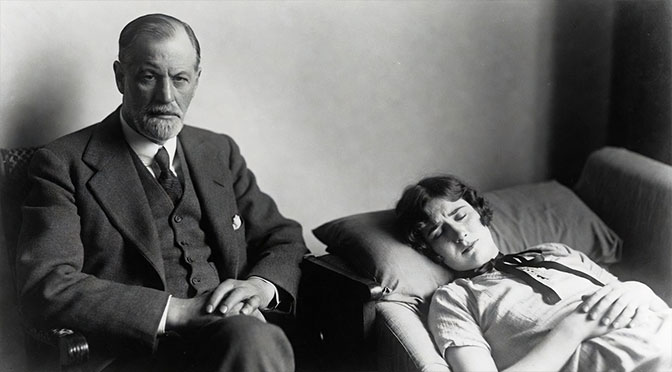
It all began in the early 20th century with Sigmund Freud. He was the father of psychoanalysis and viewed female sexuality through a lens that was heavily influenced by his time. In his 1905 work “Three Essays on the Theory of Sexuality,” he divided orgasms into two categories. The clitoral orgasm? For him, it was a relic of childhood, immature and childish. Women had to “overcome” it in order to mature—by transitioning to vaginal orgasms, which were deep and penetrative. Freud believed that this was in line with development: from the clitoris as a ‘masculine’ organ to the vagina as a symbol of femininity. Many women suffered because they were unable to make this transition—a form of “hysteria” that required therapy. Imagine a patient sitting in Freud’s Vienna practice, describing her desire, and him diagnosing her as “immature.” Psychologically, this was a blow that shrouded women in shame and gave power to men. The myth was born, and it echoed through the decades.
Kinsey and the first cracks in the facade
Then came Alfred Kinsey in the 1940s and 1950s. This US sexologist was an entomologist who switched from flies to human sexuality. His “Kinsey Reports” – “Sexual Behavior in the Human Male” in 1948 and “Sexual Behavior in the Human Female” in 1953 – were based on thousands of interviews. What he found was revolutionary: most women achieved orgasm through clitoral stimulation, not purely vaginal. Only a small percentage came through penetration alone. Kinsey called the vaginal myth a “reflection of male vanity” because men overestimated their role as “conquerors.”
He described women who were honest in surveys: a housewife from the Midwest confessed that she touched herself because her husband didn’t know about it. Psychologically, she felt guilty, but Kinsey normalized it. Science debunked the myth, but society? It clung to it. Pornography and self-help books continued to preach the “deep” orgasm.
The feminist explosion of the 1960s and 1970s
The second wave of feminism blew up the myth. In 1968, Anne Koedt wrote her essay “The Myth of the Vaginal Orgasm.” As a radical feminist in New York, she argued that the myth served to oppress women. It made women dependent on men and ignored the clitoris as the central center of pleasure. Koedt painted a clear picture: a woman in a consciousness-raising meeting shares her frustration – “I never come the way he wants me to” – and the group recognizes the cultural deception. Psychologically, this was liberating: suddenly, the clitoris was no longer taboo, but a symbol of autonomy.
William Masters and Virginia Johnson soon followed with their book “Human Sexual Response” in 1966. They measured physiologically: all orgasms are clitoral, the vagina has few nerve endings. The myth? Anatomically incorrect.
Shere Hite built on this. Her “Hite Report” from 1976 – based on 3,000 questionnaires – showed that 70 to 80 percent of women need clitoral stimulation. One reader described it this way: In her suburban home, by candlelight, she asked her husband for oral pleasure, and he laughed at first – then he learned. The report ridiculed the myth and empowered women worldwide.
The myth is melting away, but traces remain
In the 2020s, the myth has been largely debunked. Neuroscience shows that the clitoris has 8,000 nerve endings, while the vagina has far fewer. Books such as “Come as You Are” by Emily Nagoski explain it in an accessible way. But remnants remain: in some cultures, porn, or relationships, outrage arises when women demand clitoral pleasure. Psychologically, this is rooted in Freud’s legacy—a time when sex was procreative, not pleasurable.
This story teaches us that myths die slowly, but knowledge liberates. Do you have your own experiences? Share them in the comments.